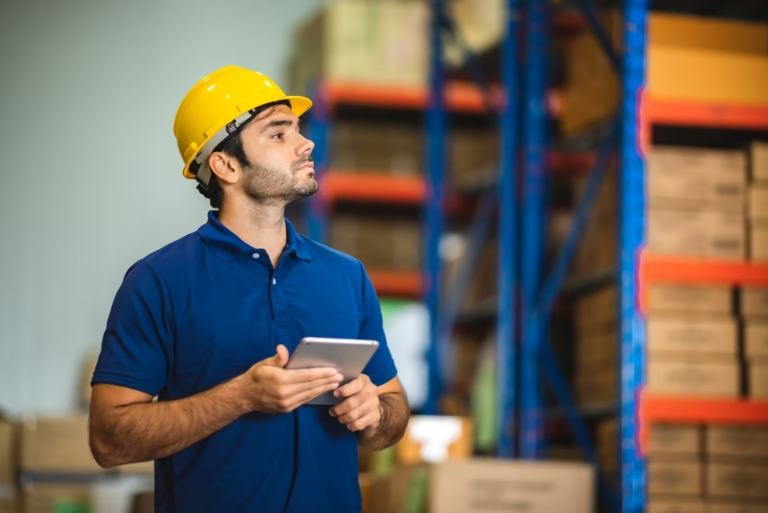
How Technology Is Transforming Cargo Transportation
Technology is reshaping cargo transportation at every stage – from how shipments are booked and tracked to the way fleets are managed and routes are planned.
For businesses that depend on reliable logistics, these changes bring greater visibility, efficiency and control over costs and service levels.
Digital Platforms Are Replacing Manual Processes
Until recently, many logistics operations relied on phone calls, emails and paper-based documents. Today, digital platforms and transport management systems (TMS)
allow bookings, quotations, documentation and status updates to be handled in one place. This reduces errors, speeds up decision-making and gives all parties
a single, up-to-date view of each shipment.
For customers, this makes it faster to request rates, compare options and confirm bookings. For carriers and logistics partners, it becomes easier to
plan loads, allocate vehicles and keep everyone informed.
Real-Time Tracking Creates End-To-End Visibility
GPS tracking, telematics and Internet of Things (IoT) devices are now common in cargo transportation. Vehicles, containers and even individual pallets
can be fitted with trackers that send real-time data on location and movement. Some devices also monitor temperature, humidity, vibration and door openings.
This visibility helps businesses to:
- Monitor where their cargo is at any given moment.
- React quickly to delays, diversions or unexpected events.
- Provide accurate delivery updates to their own customers.
- Reduce the risk of loss, theft or damage.
Automation Streamlines Warehousing And Handling
Inside warehouses and distribution centres, automation is changing how cargo is stored and handled. Barcode and RFID scanning reduce manual data entry,
while conveyor systems, automated sorters and, in some facilities, robots help move goods more efficiently.
By automating repetitive tasks such as sorting, labelling and scanning, businesses can process higher volumes with fewer errors, making it easier to
support tight delivery windows and complex order patterns.
Data And Analytics Improve Planning And Decision-Making
Modern cargo transportation generates huge amounts of data – from fuel usage and driving behaviour to transit times and delivery performance. Advanced
analytics tools can turn this data into practical insight.
By analysing trends, logistics teams can:
- Identify the most reliable routes and carriers.
- Optimise vehicle loading and reduce empty mileage.
- Forecast demand more accurately and plan capacity in advance.
- Spot recurring issues and address the root causes.
Over time, the use of artificial intelligence and machine learning will make these predictions even more accurate, helping businesses to run leaner,
more responsive supply chains.
Connected Fleets Support Safer, More Efficient Operations
Telematics systems connect vehicles to central control rooms, providing live information on speed, location, fuel consumption and driver behaviour.
This allows fleet managers to encourage safer driving, reduce idling and schedule maintenance before issues become breakdowns.
The result is a fleet that is safer, more efficient and more reliable – all of which directly benefit cargo owners who depend on timely deliveries.
Technology Supports Sustainability Goals
Environmental performance is an increasingly important part of cargo transportation. Route optimisation software can cut unnecessary mileage,
while better load planning helps ensure vehicles are used to their full capacity. Electric vehicles and alternative-fuel technologies are also starting
to play a role in urban deliveries and short-haul movements.
With accurate data on emissions and fuel use, businesses can measure and report on their environmental impact and make informed decisions about
how to reduce it.
Customer Expectations Are Rising
As technology improves, customer expectations rise. Many customers now expect the same level of transparency from their logistics providers that
they receive from online retailers – including real-time tracking, proactive updates and clear communication if something changes.
Cargo transportation companies that invest in technology are better placed to meet these expectations, offering not just the movement of goods
but a managed, information-rich service.
What This Means For Businesses
For organisations that rely on cargo transportation, technology offers a chance to build a more resilient, efficient and customer-focused supply chain.
However, it also means reviewing existing processes, investing in the right systems and working with partners who understand how to use these tools effectively.
Those who embrace digital platforms, real-time data and smarter planning will be better able to control costs, reduce risk and deliver a higher level of
service to their own customers – turning logistics from a challenge into a competitive advantage.